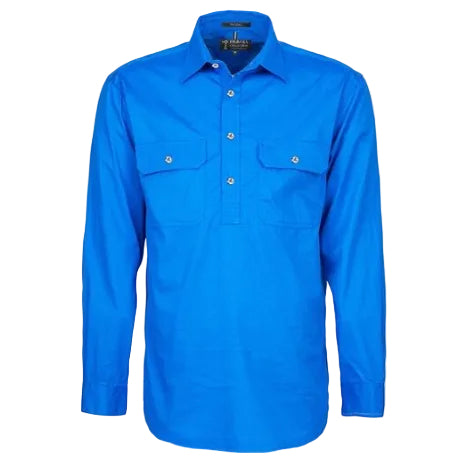
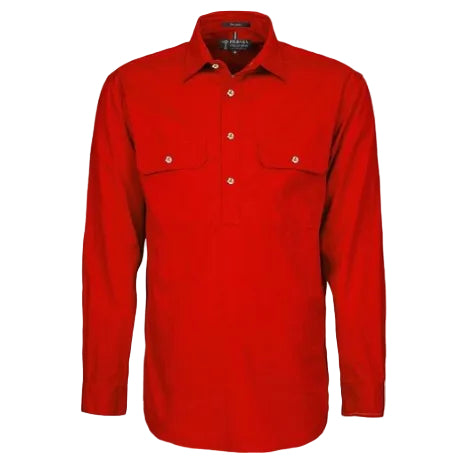
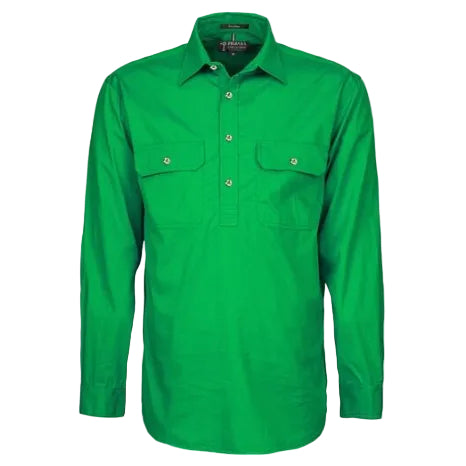
Heavyweight Work Shirts

Our Heavyweight Work Shirts collection balances durability with comfort. Quality materials, smart designs, and construction that handles the demands of working life. Shirts worth having in your wardrobe.

Thick Work Shirts for Cold-Season Site Work

Heavyweight work shirts carry the cold part of the working year. A thick flannel or brushed cotton shirt that holds warmth through an early start in an unheated shed, a cold outdoor site, or a winter property morning - and doesn't give up by midmorning. The range covers full-button and half-button constructions in weights suited to the coldest end of the working calendar.

Fabric Weight: What Heavy-Duty Actually Means

A heavyweight work shirt earns its classification through fabric density - the weight of the weave per square metre - rather than any single material type. Flannel and brushed cotton are the most common base materials, each managing warmth differently. 

Flannel is woven from loosely twisted fibres that trap air within the weave, creating insulation without synthetic fill. Brushed cotton raises the surface fibres after weaving, adding a soft texture that retains heat at the contact layer.

The result in both cases is a work shirt that holds meaningful warmth through cold conditions without requiring a jacket over the top. A quality heavyweight work shirt handles the morning cold and the temperature variations of a physical working day without becoming a problem when the work heats you up.

The Heavyweight Work Shirt as a Layering Piece

The thickest shirt in the range is not always the warmest total system. A heavyweight work shirt over a long-sleeve base layer and under a work vest delivers more practical warmth across more of the working day than a thick shirt alone - the vest holds core heat while keeping the arms free, and the system adjusts as conditions change through the shift.

Heavy-duty work shirts also serve as a practical substitute for a jacket in mild-cold conditions where a full outer layer would restrict movement through physical tasks. For conditions that go beyond what a shirt handles, the jacket sits over the top without adding enough bulk to restrict arm movement through the work.

Longevity Through the Wash

Cotton and cotton-blend heavyweight work shirts hold their shape, colour, and warmth across repeated washing better than synthetic alternatives at the same weight. A quality thick work shirt washed in cool water and line-dried rather than tumble-dried retains its loft and structural integrity through a full working season and beyond. 

When the shirt goes through the wash twice a week across five months of winter, the fabric needs to perform after the fiftieth cycle as well as it did on the first morning.

Stock Up Before the Cold Hits - Order Online Now

There's no point waiting until May to start looking. Heavyweight work shirts are available to order online with delivery across Australia - all the sizes and fabric weights you need. On top of that, our full work shirts collection has everything from the heaviest flannel through to lighter styles for the rest of the year:


Frequently asked questions

What is a heavyweight work shirt, and when should I choose one?

A heavyweight work shirt is made from denser, thicker fabric, usually around 190-200gsm, compared with about 150gsm for a standard lightweight shirt. The Ritemate Pilbara Heavy Weight Closed Front Shirt is a good example, made from 190gsm mercerised 100% cotton twill with twin needle stitching and bar tacks for extra strength. Choose heavyweight for winter work, fresh mornings, windy paddocks and jobs that are rough on clothing. When the weather heats up, a lightweight work shirt will be far more comfortable.

What is the difference between heavyweight and lightweight work shirts?

The difference is fabric weight, measured in grams per square metre (gsm). Heavyweight shirts sit around 190-200gsm, so they're warmer and stand up better to snags and abrasion. Lightweight shirts are usually 135-155gsm, which makes them cooler, quicker to dry and better for summer. Ritemate shows this well: the standard Pilbara half button shirt is 150gsm cotton twill, while the Pilbara Heavy Weight is 190gsm. Thomas Cook does the same with a 150gsm Light Drill and a 200gsm Heavy Drill half button shirt. Fabric weight isn’t the only thing that determines durability, though. The weave, stitching and construction all play a part. For hot weather, compare our lightweight work shirts.

Are heavyweight work shirts too hot for summer?

For most Australian summer days, yes, especially when you’re working outdoors in the heat. Denser 190gsm cotton holds more heat and dries more slowly when you sweat, so it can feel heavy by midday. A heavyweight shirt still earns its place on summer jobs with cold early starts or where snag resistance matters. For the hottest months, most people switch to around 150gsm or a vented design. FXD's vented tech work shirts have a mesh vent at the back yoke, and Ritemate's vented lightweight shirts use cotton mesh vents at the underarms and shoulders. Keeping one of each covers you year-round.

Do heavyweight work shirts run true to size?

Generally, yes, but fit can still vary between brands and styles. The Ritemate Pilbara Heavy Weight is the same traditional closed front design as the standard Pilbara, just in heavier cotton, and it's double pre-shrunk to help it keep its size after washing. It's listed in sizes from XS through to 6XL. Heavier fabrics do have a little less give, so check your chest measurement against our shirt sizing guide, and consider going up a size if you're between sizes or plan to wear a thermal underneath. If you already wear a standard Pilbara, your usual size is a good starting point.

Which trades or conditions suit a heavy-duty work shirt?

Heavy-duty shirts suit outdoor work in cooler weather and jobs that are tough on clothing. Think farming and stock work on frosty mornings, fencing where wire and timber catch on fabric, construction and landscaping through winter, and workshop jobs where you're leaning on benches and brushing past equipment. The heavier cotton resists wear and snags better than a lightweight shirt, and it adds warmth when layered under a work vest or work jacket.

How do I care for a heavyweight work shirt to keep it hard-wearing?

Brush off dried mud first, then wash your heavyweight work shirt in cold or warm water with similar colours, turned inside out to protect the fabric surface and buttons. Skip bleach, which weakens cotton fibres, and pre-soak grease stains rather than scrubbing hard. Line dry in the shade where you can, as high dryer heat and strong sun both break down cotton and fade colour over time. Some heavyweight cotton shirts, like the Ritemate Pilbara Heavy Weight are double pre-shrunk to help maintain their fit, but it's still worth following the care label. Fix loose buttons and small tears early, before they turn into bigger problems.