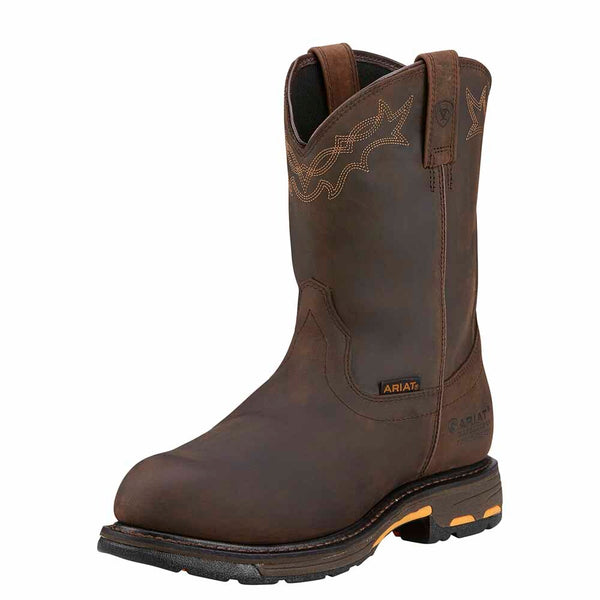
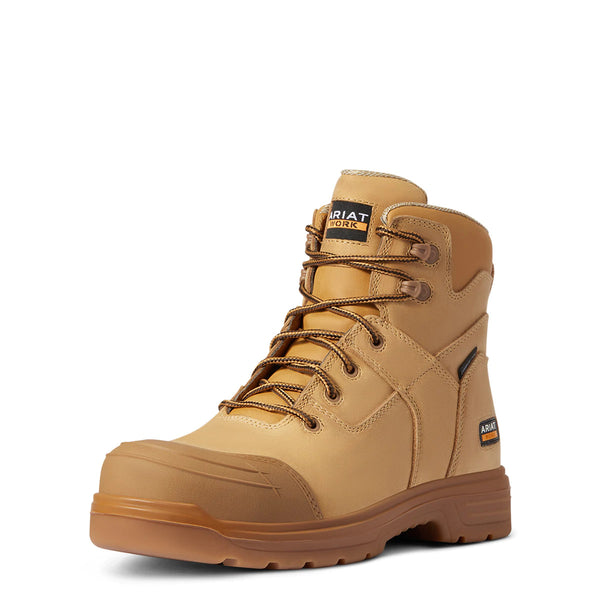
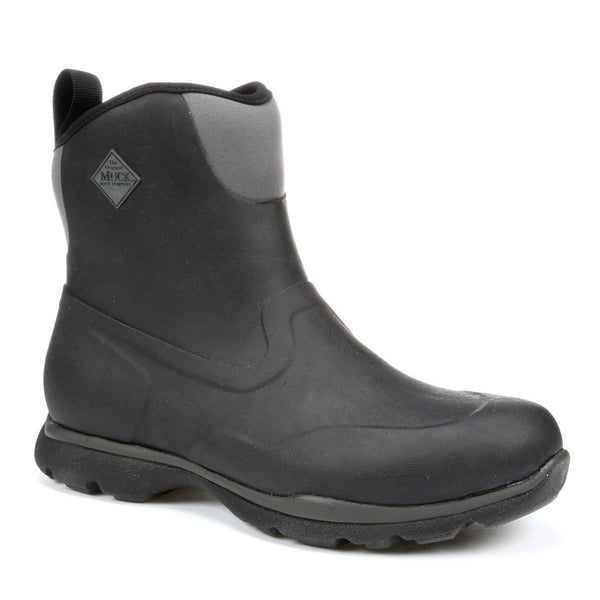
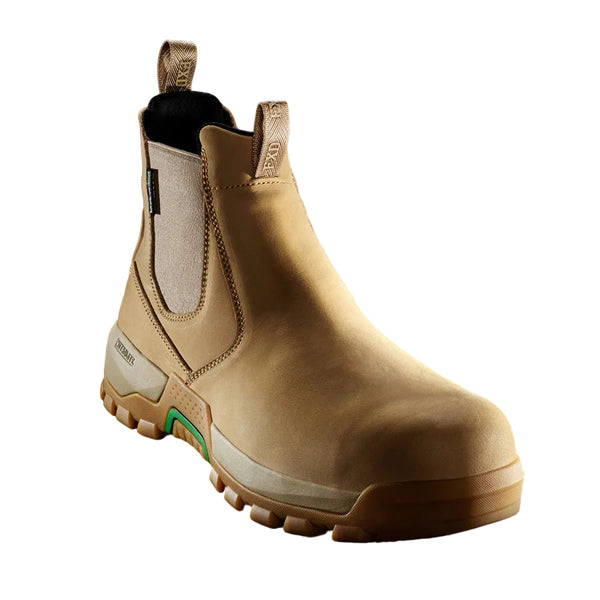
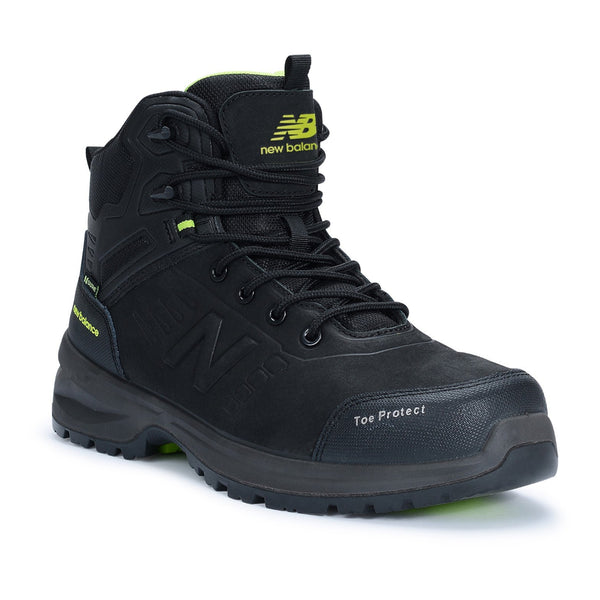
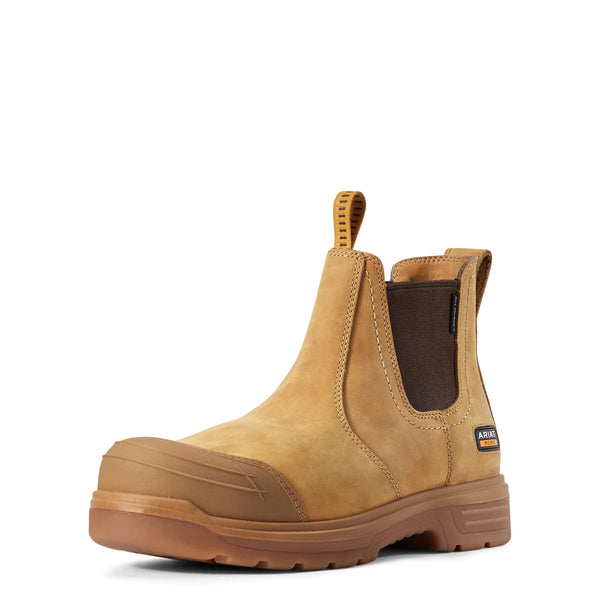
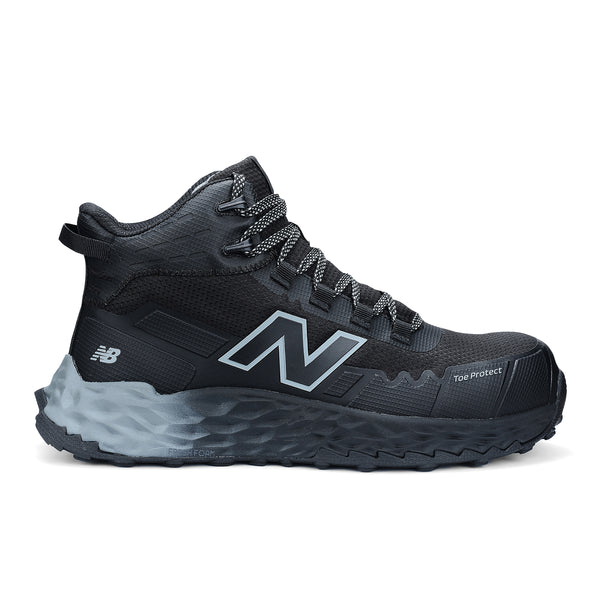
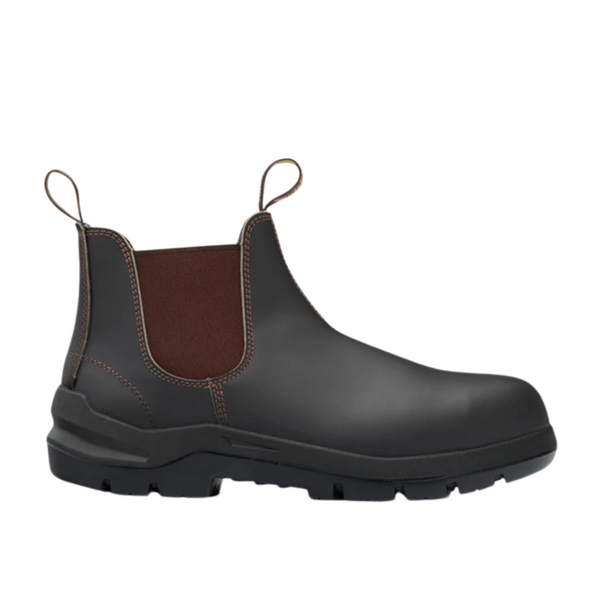
Composite-Toe Safety Shoes

Composite and carbon toe safety footwear from FXD, New Balance, Mack, Blundstone, CAT and Ariat. Lightweight, non-metallic toe protection in boots, sneakers and pull-on styles.

The Best Composite Toe Shoes Available

A composite-toe safety shoe offers a similar protective forefoot coverage as a steel-toe boot without the metal. Built from non-metallic materials including fibreglass, Kevlar, and carbon fibre composites, these shoes meet comparable protection standards to steel but pass through metal detectors without triggering and don't conduct heat or cold to the same degree. A practical choice for specific worksite conditions.

What Makes Composite Toe Different

The composite toe cap is built from non-metallic engineered materials rather than a traditional steel insert. The protective outcome under testing standards is equivalent - impact resistance and compression protection at the same rating levels. What changes is how the boot behaves in specific site conditions.

Composite safety shoes don't activate metal detectors, making them the required choice for workers entering airport operations, defence facilities, food processing plants, and other regulated environments where metal detection is part of standard site entry. 

They also don't conduct temperature the way steel does - steel caps can become uncomfortably cold in freezer environments and hot in high-heat work areas. A composite cap holds a more stable temperature across a wider range of working conditions.

As with all safety footwear, individual product pages specify the applicable protective rating for each style. Confirm your site's compliance requirements against the product specification before purchasing.

Weight and Comfort Across a Full Shift

Composite toe caps are lighter than steel caps of equivalent protection. The weight difference is meaningful over a long day, particularly for workers who stand or move constantly through an eight-to-ten-hour shift. The reduced forefoot weight accumulates into noticeably less fatigue in the lower leg by the end of the working day.

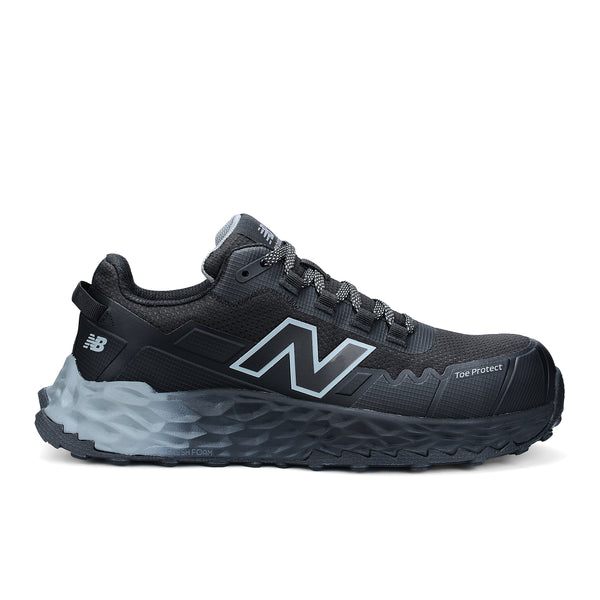
In shoe form rather than boot - ankle-height or lower, without a shaft - composite safety shoes suit workers whose hazard is at the forefoot level rather than requiring ankle coverage. On sites where the foot rather than the ankle is the primary concern, a shoe profile keeps the workwear more practical and comfortable through a full day's work.

When to Choose Composite Over Steel

Composite safety shoes are the right call for metal detection requirements, cold storage and freezing environments, high-temperature work areas, and any worksite where the worker moves regularly through controlled access points. 

They're also worth considering for workers who have found standard steel-toe boots uncomfortable at the forefoot - the composite cap doesn't produce the same hard edge contact that some steel-toe wearers notice on the inner face of the cap.

Specifications Listed. Decision Made. Order Online.

Every composite-toe shoe in the range has its protective rating and construction details on the product page - check them, choose the right style, and order for delivery across Australia. You may also be interested in the full picture of work footwear options, including every toe type and construction alongside these shoes:


Frequently asked questions

What are composite toe shoes, and are they as safe as steel toe?

Composite toe shoes use a metal-free toe cap made from materials like fibreglass, Kevlar or carbon fibre. When certified to AS/NZS 2210.3, a composite cap has to meet the same 200 joule impact requirement as a steel cap, so both offer tested protection. Composite toe caps are often lighter and conduct heat and cold less readily than steel, although the overall comfort and weight depend on the shoe's construction. Some workplaces have specific footwear requirements, so always check if the individual shoe’s certification meets your site’s rules. For more information, our guide to steel toe or composite toe work boots compares both.

Are composite toe shoes airport-friendly and safe for electrical work?

Composite toe caps are metal free, so the cap itself won't trigger a metal detector. Selected styles from brands like FXD, New Balance and Mack are marketed as airport-friendly, but other parts such as eyelets, shanks or zips can still contain metal, so check the product details if you fly regularly. For electrical work, a composite cap on its own isn't electrical protection. Look for footwear specifically tested and rated for the electrical hazards involved, and confirm it meets your workplace's safety requirements. Some work boots carry an electrical hazard (EH) rating, but this isn't the same as an anti-static rating. Anti-static footwear is designed to dissipate static electricity, while EH-rated footwear provides a specified level of electrical insulation under defined test conditions.

Do composite toe shoes run true to size?

Composite toe shoes fit like the rest of each brand's footwear, so start with the sizing system. FXD, New Balance, CAT and Muck Boots are sold in US sizes, usually about one size higher than AU/UK, while Blundstone, Steel Blue, Rossi and most Mack styles use AU/UK sizing. FXD's Dura-X boots are built on a wider fit last, and Blundstone half sizes add width rather than length. Because a composite toe cap won’t stretch, your toes should have room to move without pressing against it. Measure both feet, fit the larger one and allow for thick work socks. If they’re tight across the toes, consider a wider fitting rather than simply sizing up. The FXD sizing guide and CAT sizing guide include US to UK conversions.

Are composite toe shoes lighter and cooler than steel toe footwear?

Generally, yes. Composite caps are considerably lighter than steel, and because they don't conduct heat and cold the same way, they help keep your feet at a more even temperature. The overall weight and breathability still depend on the whole shoe, including the upper, sole and lining. Safety joggers skip the weight and bulk of a boot, and the FXD WJ-1 Safety Jogger, for example, pairs a composite toe with a breathable ripstop upper and air mesh lining. Browse our safety joggers or read Safety Joggers - Are they a Better Shoe for You?

Are composite toe shoes compliant with AS/NZS 2210.3?

Many are, but compliance depends on the individual model rather than the toe cap material. AS/NZS 2210.3 is the Australian and New Zealand safety footwear standard, and it requires the toe cap to withstand a 200 joule impact. In our range, several FXD, Mack and CAT styles state certification on their listings, but not every composite toe shoe is necessarily compliant. Some Ariat work boots are built to US specifications and don't meet AS/NZS 2210.3, and some footwear only lists US ASTM ratings, so confirm certification on each product page and check it meets your site's requirements. Browse FXD safety boots or read our safety joggers guide.

When do composite toe shoes need to be replaced?

Replace composite toe shoes straight away if the toe cap is dented, cracked, exposed or otherwise damaged, as its protection is almost certainly compromised. Damage to a composite cap isn't always visible from the outside, so after a heavy impact it's safest to replace them even if they look fine. It's also time for a new pair when the tread is worn smooth, the upper has split or the sole is lifting, since these affect grip and support. There’s no fixed replacement timeframe, so check your footwear regularly for signs of wear and damage. Browse our safety joggers and safety boots when it's time to replace them.